
Twin Hills Trails Park Riparian Project
Watch this space for project updates! Sign up today to work in Twin Hills Park on Sunday, Oct. 25. For an overview of the project, read from the bottom of this page.
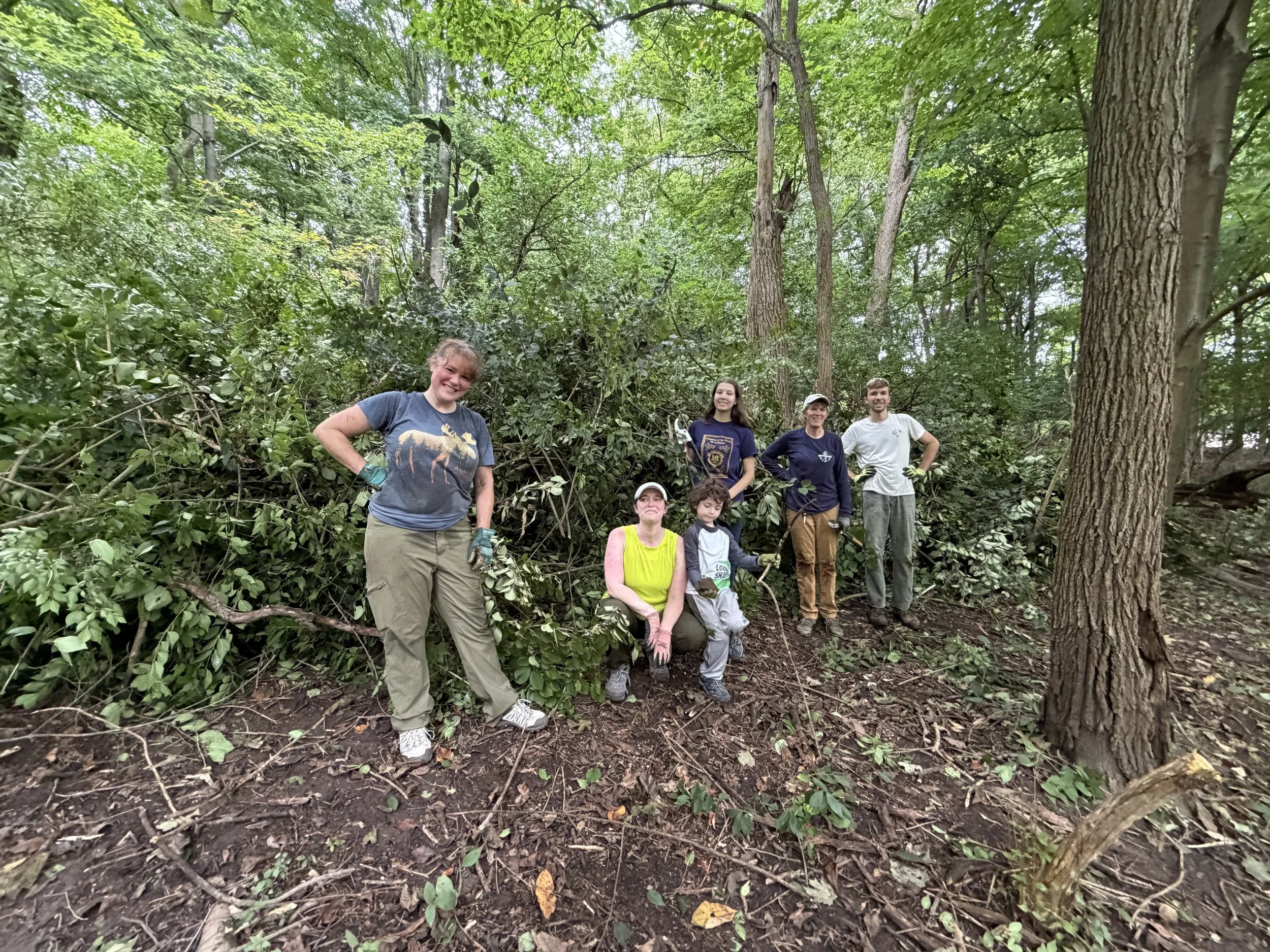
These volunteers stacked the giant brush pile behind them.

About Eaton Corp.
Eaton Corporation is a multinational power management company with U.S. headquarters in Beachwood, Ohio, and a corporate presence in the Pittsburgh area. Based in Dublin, Ireland, Eaton has more than 85,000 employees.
In the Pittsburgh area it employs approximately 1,200-1,500 people (as of 2023). One employee, Cheryl Mayhew, is a member of the conservancy’s board of directors.
The corporation’s three business sectors are Electrical, Aerospace and Mobility. Its local bases of operations are an electrical sector headquarters in Moon Township and an electrical innovation center in the Warrendale section of Marshall Township.
Sept. 19, 2026: Clearing the project’s Phase 2 area, planting 200 perennials
A large group of volunteers showed up to help, including members of a CCAC ecology class, many first-timers and several board members. The main tasks were:
Clearing large invasive shrubs (double-file viburnum, honeysuckle and privet), and hauling the branches away from the trails and the stream.
Erecting 2 large planting pods that exclude deer while young plants get a head-start.
Planting 200 rushes and perennial forbs and in the pods and along the stream bank.
Some of the shrubs we removed were at least 30 years old, and were substantial and heavy to move. The resulting brush piles, stacked to allow for air circulation and decomposition, will create habitat for birds, mammals and amphibians for the next 3-5 years as the wood breaks down.
The open spaces created in this area along the stream will be where volunteers will plant native trees and shrubs in October.
May 17, 2026: 200 perennials, five deer exclosures
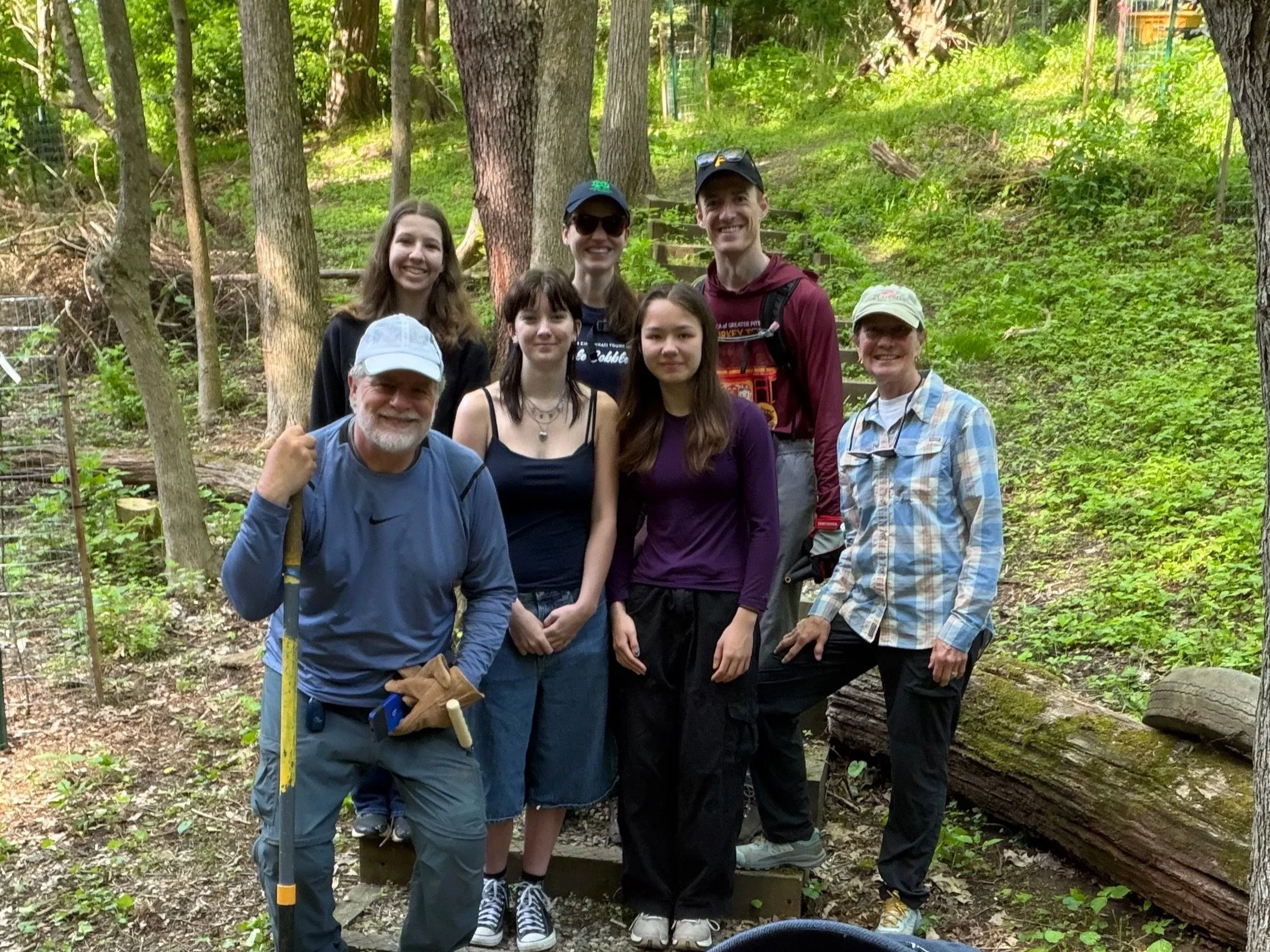
At this May work day, volunteers installed five “planting pods” - fenced areas about 10’x6’ that surround some of our new shrubs - and planted perennials inside. These pods will protect the young plants from deer-browsing until the plants are robust enough to withstand the pressure. They also planted perennials in the fence cages surrounding trees installed in April.
Nine volunteers, including six first-timers, planted over 200 perennials, including blue mist flower, blue wood aster, purple coneflower, black‑eyed Susan, and Carolina lupine, along with a few redbud seedlings rehomed from a board member’s garden.
After planting, volunteers hauled water from the stream and gave all the new plants a good drink.
Several deer kept an eye on the work while chowing down on some recently felled invasive honeysuckle shrubs.
April 18, 2026: We added 58 new native plant species
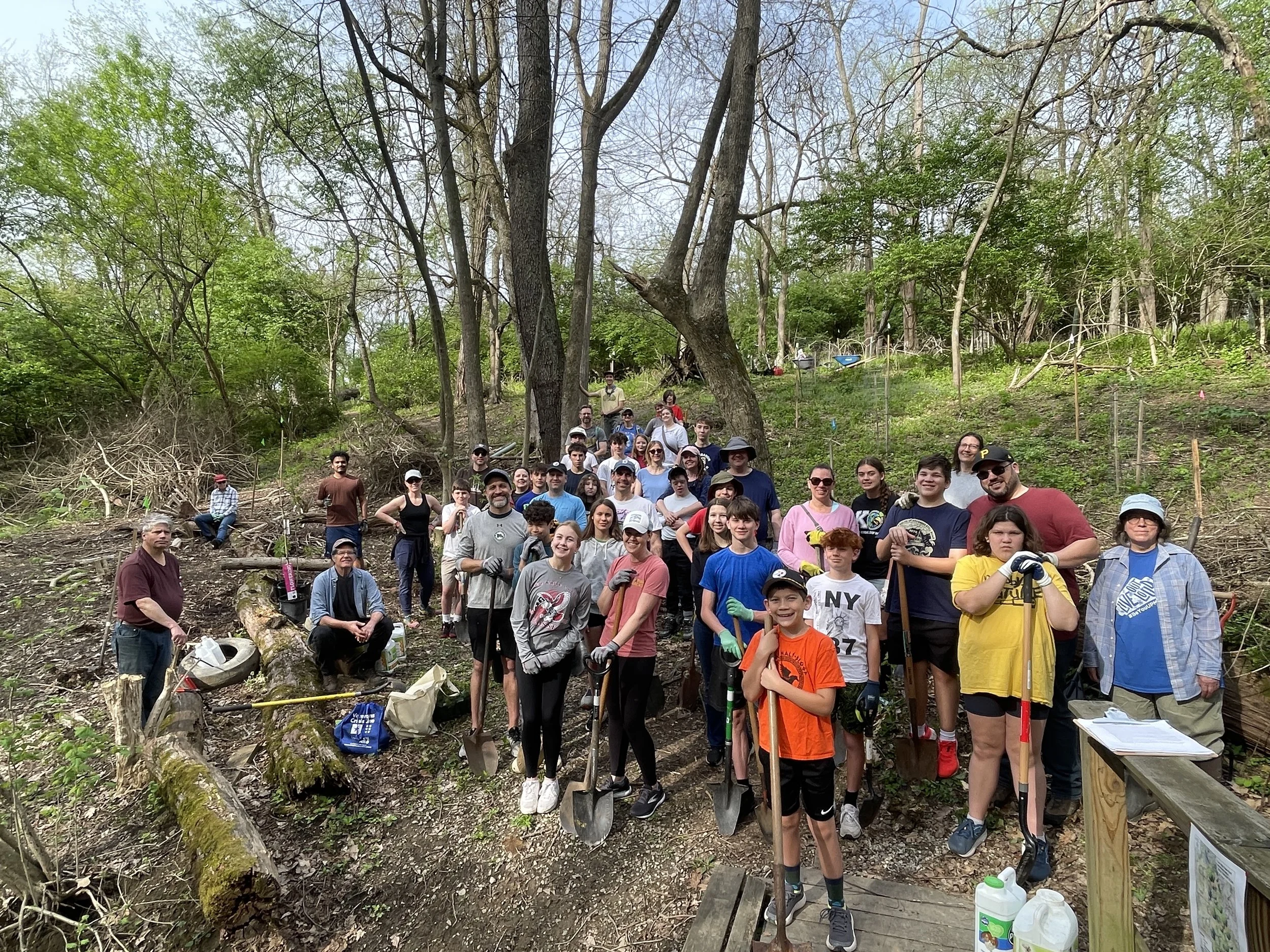
A large cadre of volunteers from Mt. Lebanon and Scott Township planted 45 new trees, 147 shrubs, and 164 perennials in the riparian area of Twin Hills. In addition, a seed mix spread on raked soil contains 29 species of native grasses and perennials.
These new plants represented 58 new native species in an area that previously was dominated by three invasive non-native species (Japanese honeysuckle, privet and double-file viburnum).
Every tree and many of the shrubs got metal cages and 3 stakes for protection from deer browse.
March 22, 2026: Time for spring cleaning!
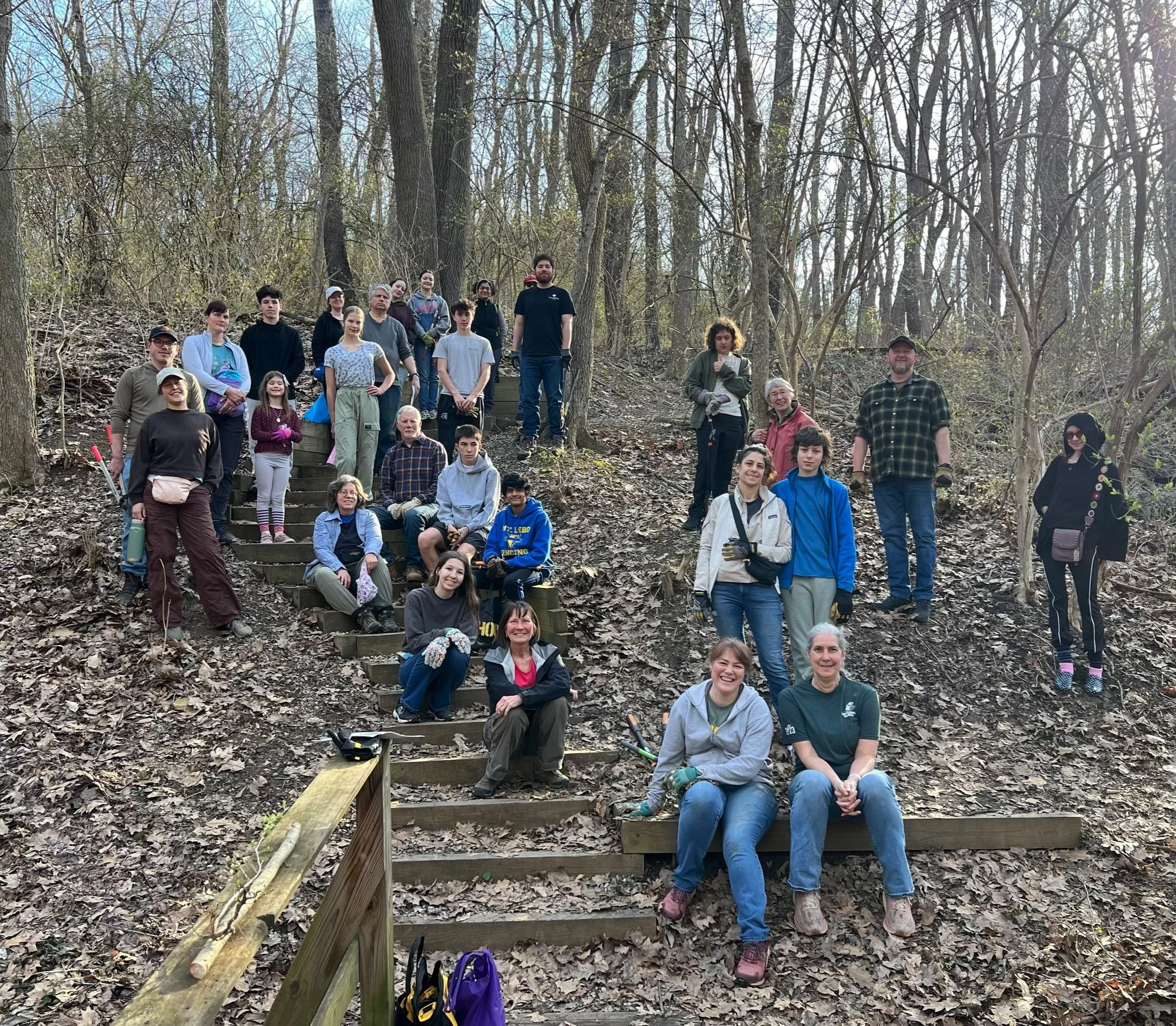
About 30 volunteers from Mt. Lebanon, Scott Township and Dormont worked to remove invasive shrubs and create habitat brush piles with the branches and sticks. This created open space where our volunteers will plant native trees, shrubs and perennials in the coming months.
Some volunteers cleared trash from the streambed in the whole project site, and a couple others planted “live stakes,” which are dormant stems from native shrubs that can root directly in moist soil, such as along a stream.
The volunteers ranged in age from single digits to their 70s, and included about a dozen high school students. Some of these students are Mt. Lebanon Nature Conservancy board members, and many are repeat volunteers. Some are seeking volunteer hours for required community service projects, and some don’t need the hours but just like giving back to the community.
We think this riparian zone project will keep giving back to local residents for many decades to come.
March 2026: A game-changing grant from Eaton Charitable Fund
The conservancy is enormously grateful for grant of $9,535 from Eaton Charitable Fund, the giving arm of Eaton Corp. for the Twin Hills Trails Park Riparian Project. The park improvement project aligns with Eaton’s priority of “Preserving and Restoring Our Environment.”
Here is the spending plan:
PLANT MATERIALS
$2,000 80 Native tree and shrub saplings
$ 170 100 Dormant live stakes (native) for streambank erosion control
$1,320 12 Flats of native perennials
$2,100 30 lbs Groundcover conservation seeding
MATERIALS
$1,050 600’ Tree protection fencing
$ 900 120 Fencing stakes
$ 150 Fencing hardware
$ 45 Landscape staples
$ 600 Lumber and hardware for 4 Leopold benches
$1,200 40 Anti-skid plates for footbridges
$9,535 TOTAL
Nov. 2025 - Feb. 2026: The concept
Board members scouted the Twin Hills riparian area in late 2025 to assess what would be achievable in spring and fall volunteer work days in 2026.
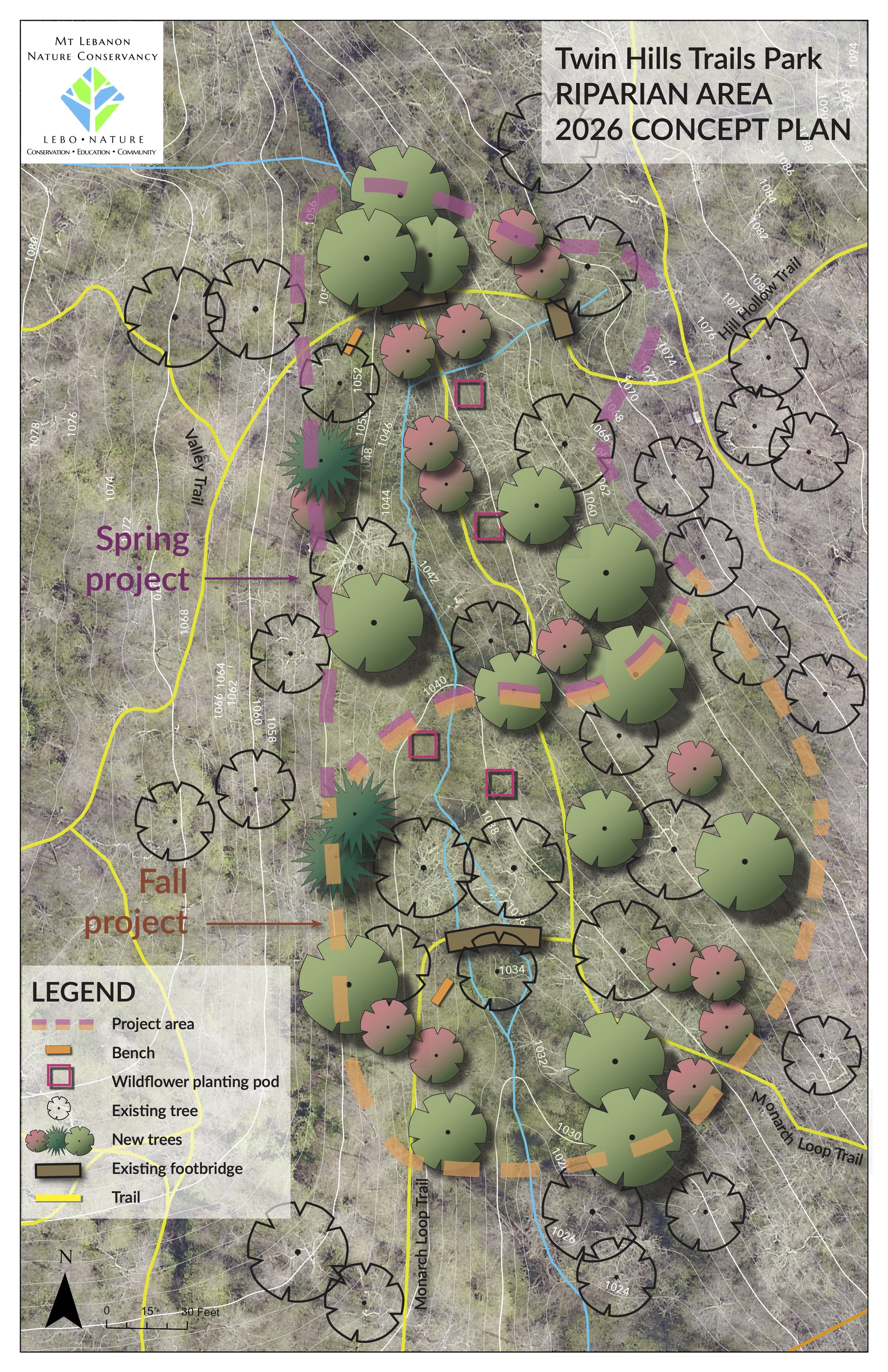
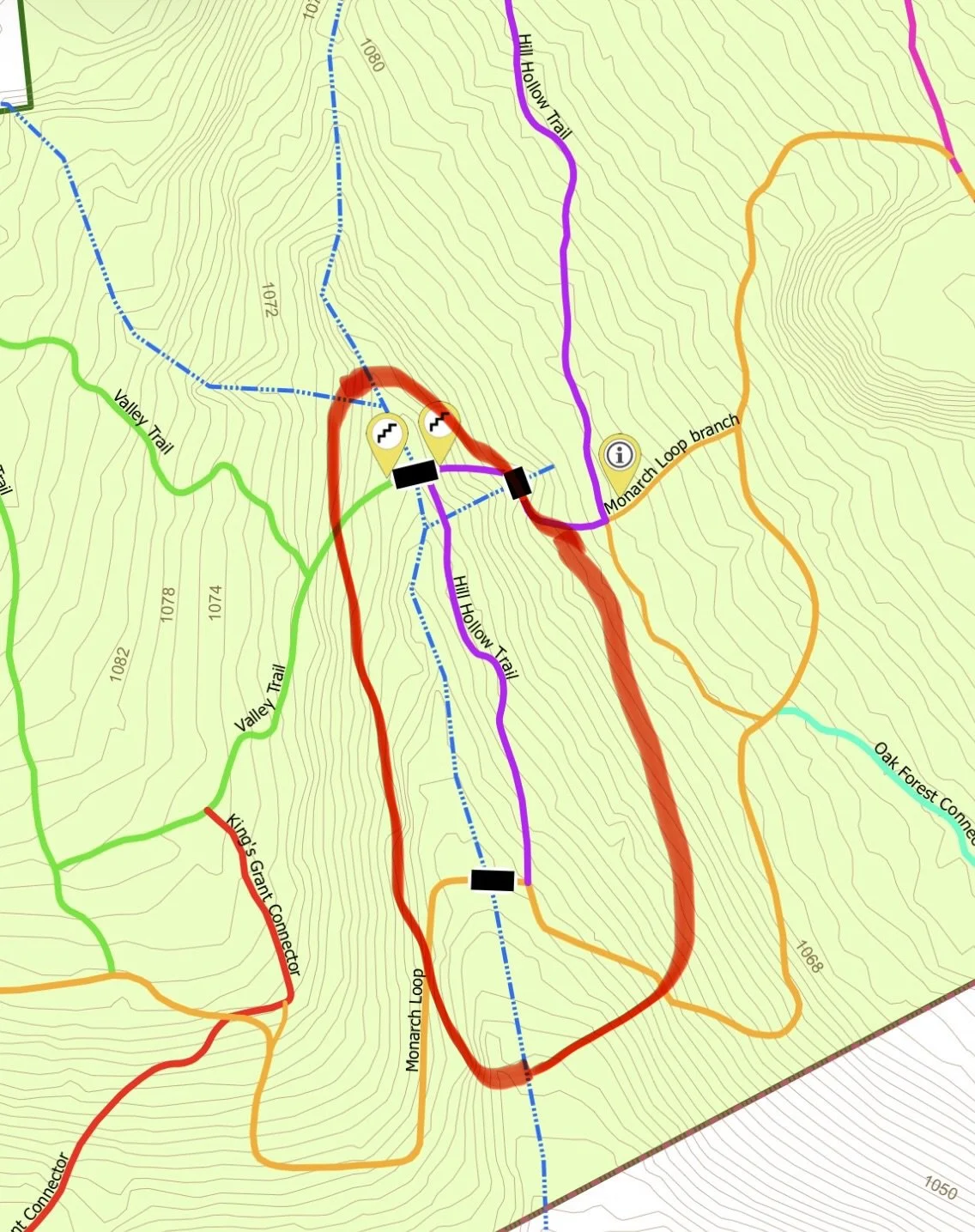
The proposed project area covers about 350’ linear feet of the stream and extends about 50’ on both sides. Frequent park visitors will probably immediately know the area because it is essentially between the two big footbridges and also extends a bit north and south.
The work plan is to remove invasive plants in March and September, and immediately install native trees, shrubs, native plant seeding and perennials in April, May and October.
Any healthy native trees will remain in the project area, and about 80 new native trees and shrubs will be added. New plants will be enclosed in wire fences to protect them from deer browse.
Depending on the availability of funding, the conservancy also hopes to install four fenced “planting pods” measuring about 10’ square, inside which hardy native perennials and ferns will be planted. After these plants become established sufficiently in a few years, the conservancy should be able to safely remove the fencing. With luck and good weather, the deer-resistant wildflowers will thrive and spread through the area.
In addition, if funding allows, the board will construct and install some Leopold benches similar to those found elsewhere in the park.
Fall 2025 - Scouting the site
In November and December, board members viewed the site to identify the healthy native trees and shrubs that should remain. They also planted a dozen or so small trees that needed to get in the ground, and protected them with “tree tubes” or fencing.
Fall 2025 - Project planning
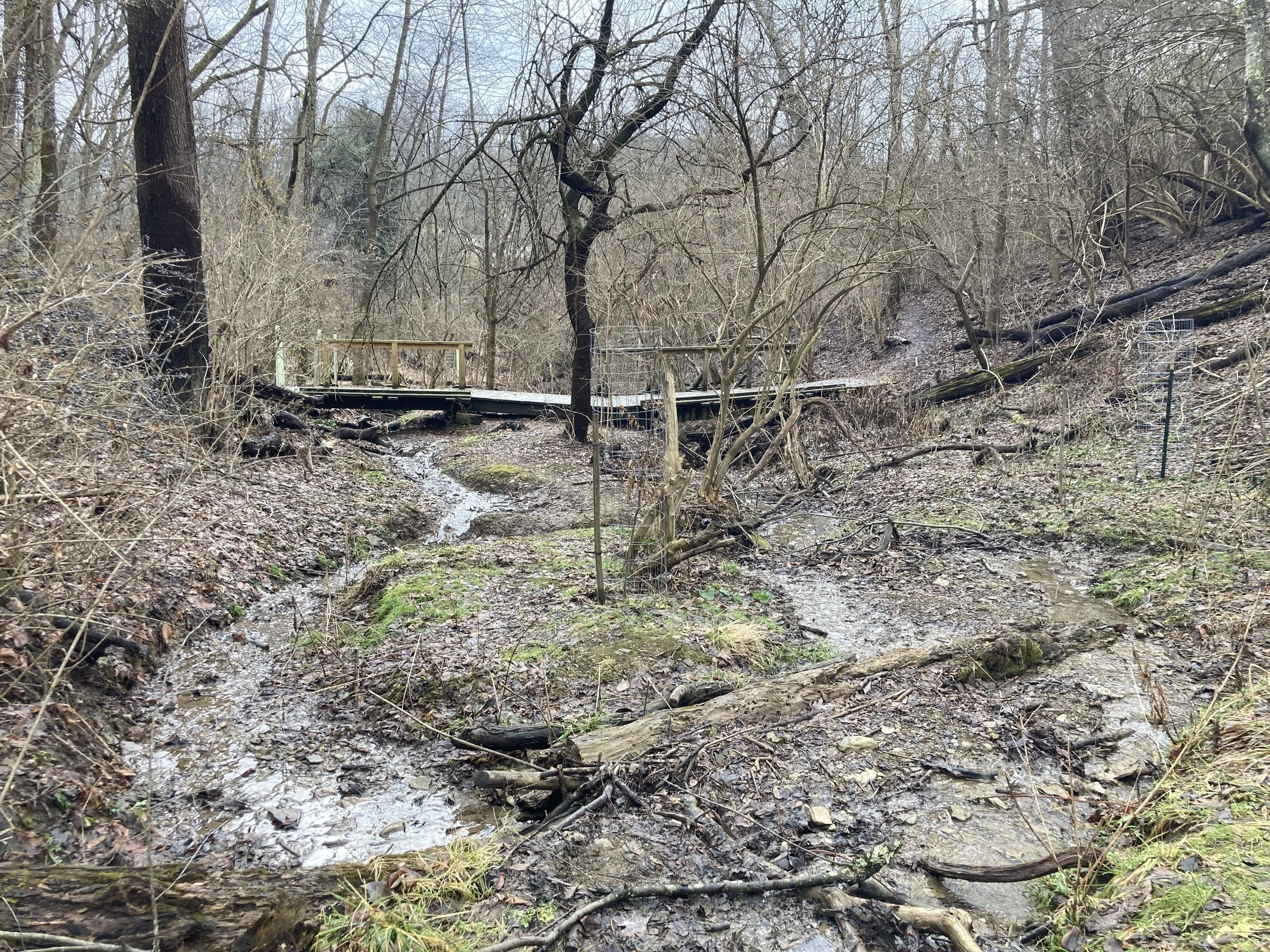
In 2025, the conservancy’s board weighed potential next projects and picked the part of Twin Hills Trails Park where the stream is formed, mostly by stormwater runoff.
Rehabilitating this 0.6-acre area had the potential to make a huge difference in the park:
It is a high-visibility area, where residents from both Scott Township and Mt. Lebanon could witness the transformation, contributing to community education about improving site ecology.
The project could improve stream water quality, enhancing the aquatic and riparian habitats.
The work could slow the rate and flow of the stream during storms, reducing erosion.
It could add to the biodiversity of the area by removing invasive plant species and adding all native plants.
It would support habitat improvement for two rare snails that live in parts of the park with calcified limestone. LEARN ABOUT THE SNAILS!
The board hoped this work could be tackled in a single year so that once invasive species are removed, new native plants could be added promptly.
2016 -2025
Volunteers gradually cleared and planted parts of this area in the past decade. When building Hill Hollow Trail in 2016, the area was so thick with vegetation, you couldn’t even take a step. We we look forward to seeing the area transformed with help from the community!